Federal agencies are under pressure to modernize—whether it’s retiring legacy systems, adapting to organizational shifts under ATI, or improving financial transparency ahead of audit season. But success doesn’t come from access to new tools. Agencies need to align changes with their mission, minimize disruptions, and ensure long-term continuity.
That’s where many efforts go off track.
Too often, modernization is approached as a technical project when it’s really an operational and strategic transformation. To succeed, government teams need two things: a clear, mission-focused strategy and execution partners who know the terrain.
Aligning Change with Mission Reality
Every agency operates differently. Budgets, policies, timelines, and internal capacity shape what’s possible—and when. That’s why modernization can’t start with tech. It must start with understanding the mission.
Before launching any change initiative, leaders need support in defining what success looks like in context. That includes evaluating readiness, aligning with leadership priorities, and identifying operational constraints that could derail implementation later. When partners bring that understanding upfront, agencies save time, avoid rework, and keep transformation tied to what matters most: mission outcomes.
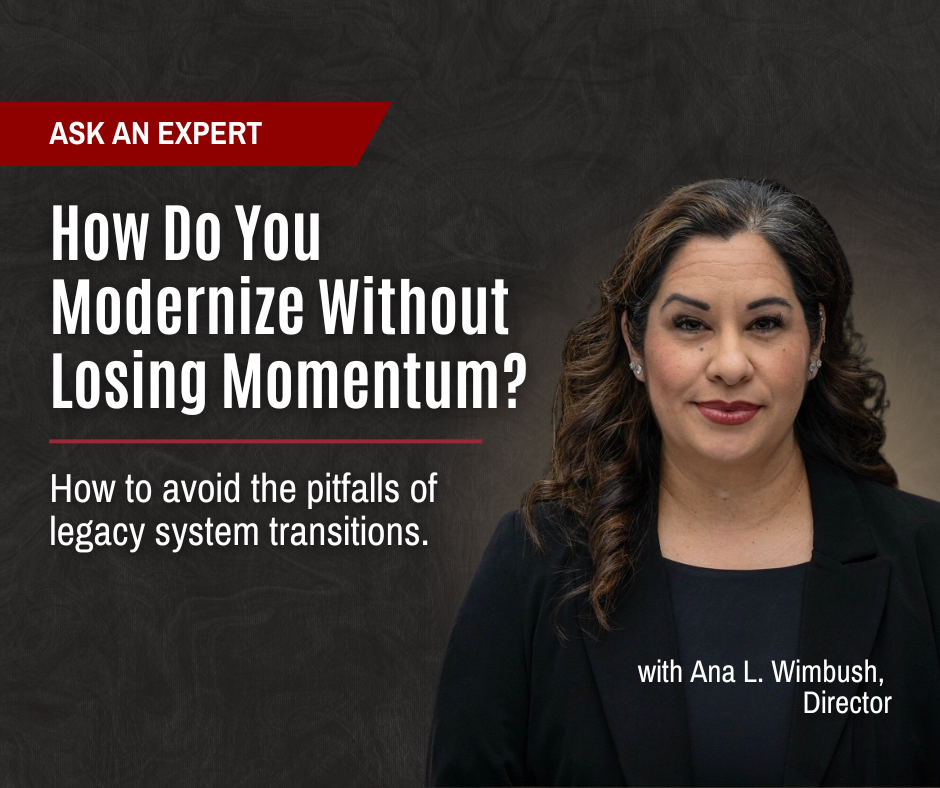
“We don’t take a one-size-fits-all approach because we know the mission isn’t one-size-fits-all,” says Ana Wimbush, Director at Thompson Gray. “Our first job is to listen, and to really understand the operational goals and constraints before recommending a path forward.”
Turning Functional Complexity into a Clear Path Forward
Modernization often unearths more complexity than expected. This is especially common in areas like financial systems, logistics, and acquisition. Functional expertise becomes essential.
Agencies benefit most when their support partners bring not only technical know-how but also a working understanding of federal operations, change management, and compliance. This enables smoother ERP transitions, better data visibility, and more sustainable outcomes across the lifecycle, from planning to sustainment.
“You can’t modernize a system unless you understand the function behind it,” Ana explains. “It’s not just about software. It’s about knowing what’s being tracked, why it matters, and how to preserve continuity while making things better.”
Sustaining Results After Go-Live
Too many transformation efforts stall after implementation. That’s why sustainment planning should start early.
From establishing performance metrics to embedding continuous process improvement, agencies need frameworks that keep systems aligned with evolving missions, funding cycles, and audit requirements.
When that kind of planning is baked in, modernization efforts become easier to scale, replicate, and maintain.
“The goal isn’t just to get through go-live,” Ana notes. “The goal is to build something that works, and keeps working, for the people doing the mission every day.”
Built for Government. Focused on Mission.
Effective transformation requires a partner who understands the pace, complexity, and importance of government operations. And who’s willing to do the hard work behind the scenes to get it right the first time.
At Thompson Gray, we align strategy with execution to support what matters most: delivering outcomes that serve the mission, long after the transition is complete.